|
☕ DrinkCoffeeAndProfit
Smart money moves before breakfast
|
Inspiration Quote for the Day
“Experience is a hard teacher because she gives the test first, the lesson afterward.”
Vernon Law
|
|
The Morning Ritual
Three Increases Arrive in One Envelope. Only One of Them Is a Choice.
|
Saturday is when the mail pile finally gets opened. Somewhere in it, this time of year, sits the annual escrow analysis from your mortgage servicer. Most people read one line on it. The new monthly payment.
That number is three separate increases stacked together. The statement prints them as one. Only one of the three is a bill you can settle today, and the other two follow you into next year.
|
|
Those two bills are priced in dollars. A partner view on that below.
|
· · · Partner Message · · ·
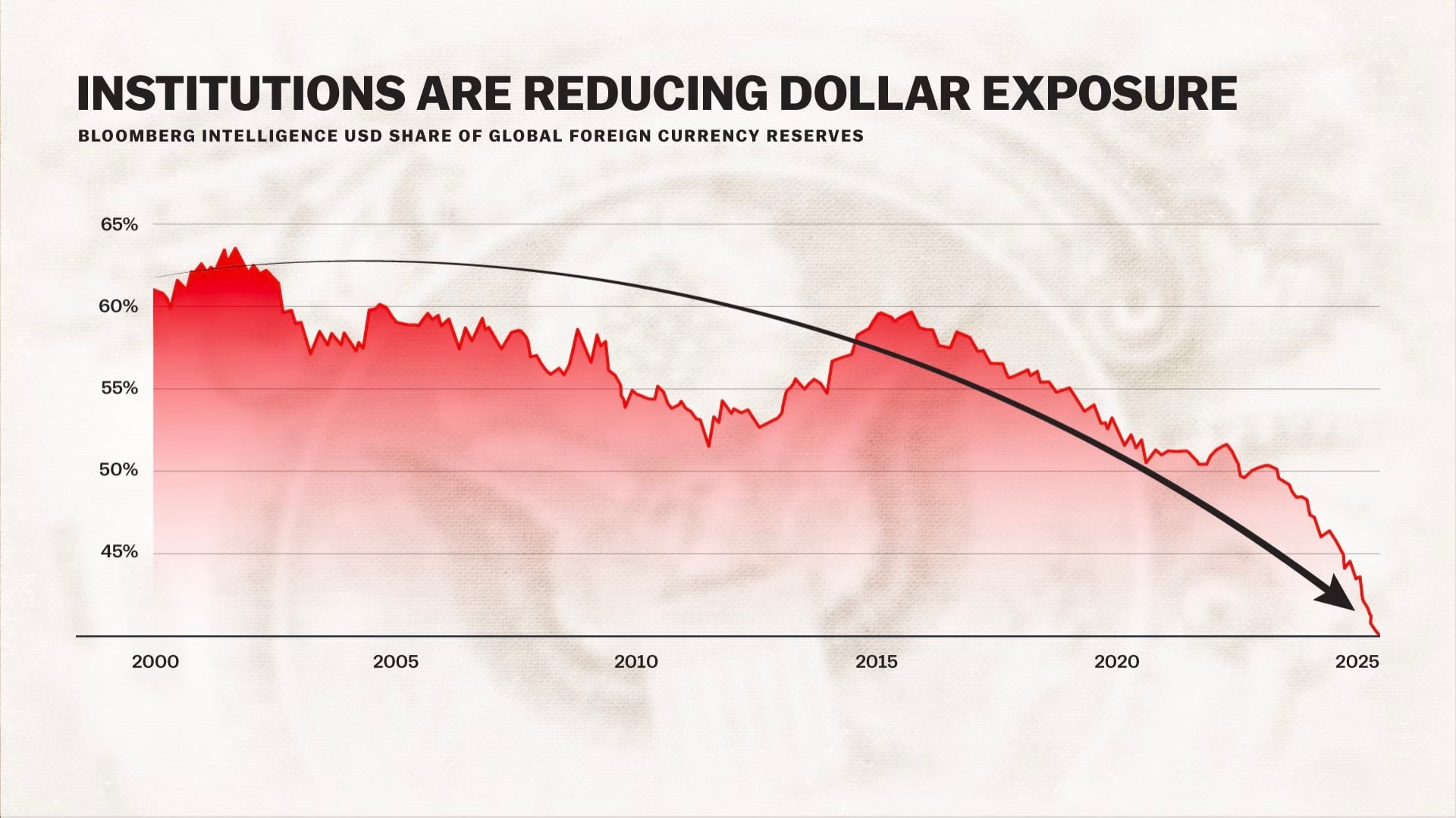
The downward slide has begun.
According to new research from Bloomberg, the U.S. dollar’s share of global reserves has just fallen to the lowest level this century.
While everyone is distracted by hyped-up IPOs and the AI bubble, the world is walking away from the dollar, the foundation on which all of our lives are built is crumbling.
And I believe the consequences for the country, and your financial security, are extremely serious.
That means every dollar you have saved and invested… every good, every service, every asset… all of it could be about to be repriced against a new monetary anchor. It’s not gold, or crypto, but something far more unexpected. An asset so fiercely contested and so critical that Vladimir Putin once claimed whoever controls it “will become the leader of the world”
Nobody can tell you exactly how this reset will play out.
But I do know that the last time America changed its money like this, half a century ago, it split the country in two. Between the folks who understood what was happening and responded accordingly, and those who got brutally left behind.
That line is being drawn again. And what you do with your money in the months ahead could decide which side you end up on.
I’d like to show you which investments could thrive, and which could be the most dangerous, inside Trump’s new monetary order.
Good investing,
Porter Stansberry
|
In One Sip
► About `65%` of escrow accounts came up short this year. The average gap is `$2,157`. Source: Cotality analysis for USA Today.
► Spread across `12` months, that catch up alone adds about `$180` a month. The loan rate never moves.
► Your servicer collects one twelfth of next year’s expected tax and insurance bills each month. On top of that it may hold a cushion of up to one sixth of the annual total, roughly two months. Source: `12 CFR 1024.17`.
► Home insurance averaged `$1,902` in 2020 and `$2,530` by 2023. The climb has slowed since, and it has not stopped. Source: Insurance Information Institute and Philadelphia Fed data.
► The quiet part: the annual escrow statement cannot require a lump sum. By rule the shortage may be repaid in equal monthly payments over at least `12` months. Source: CFPB mortgage servicing FAQ.
|
Why It Matters for Your Money
Take a house where the servicer paid out `$6,000` last year for taxes and insurance. This year it projects `$6,600`. Nothing about that house changed. The assessor and the carrier did the changing.
Increase one is the catch up. The account ran `$2,157` short, so `$180` a month gets added for a year.
Increase two is the new base. `$6,600` divided by `12` is `$550`, against `$500` before. That is `$50` a month, and it does not expire in a year.
Increase three is the cushion. The cap is one sixth of the annual total, so the reserve target climbs from `$1,000` to `$1,100`. Collecting that extra `$100` costs roughly `$8` a month.
Stack them and the payment rises about `$238` a month. That is `$2,856` over a year on a loan whose rate never moved. Write the shortage check and you kill `$180` of it. The other `$58` stays.
|
· · · Partner Message · · ·
You’ve worked hard for retirement: now make sure you’re getting everything you deserve. These 10 little-known money moves could make a big difference.
This is an advertisement.
|
The Wealth Angle
Here is the part that bothers me. That cushion is your money, parked with a servicer, and federal rules do not require anyone to pay you interest on it. Only a minority of states make them. Two months of a `$6,600` bill is `$1,100` sitting still.
Two things can be true. Escrow is a real service. It turns two brutal bills a year into something a household can plan around. Plenty of people would be behind on the tax bill without it. It also holds a rising balance at zero, and it reprices itself once a year while you are not looking.
I keep my own account escrowed rather than waiving it. What I do not do is file the analysis unread. I check the projected disbursements against the actual tax bill and the declarations page. That projection is an estimate, made by someone who has never seen either document.
A waiver is the other road. It usually needs a conventional loan and real equity, and it hands you two large bills to manage yourself. That works for some households and wrecks others.
|
☕ Key Insight:
A fixed rate fixes the interest on your loan. It fixes nothing about the two bills your servicer pays for you. Those two are now the fastest moving part of the payment.
|
Coffee Break Move
If you are comfortable: Pay the shortage in full this weekend, then read the projection page. Compare the projected tax figure with your actual bill and the projected premium with your declarations page. If either is stale, ask the servicer in writing for a fresh analysis.
If you are stretched: Take the `12` month spread. It is yours by rule, and the statement cannot demand a lump sum. Then go after the base instead. Get two insurance quotes this week, and find out when your county’s assessment appeal window closes.
The envelope has been in that pile for a week. It takes ten minutes and a pen. This is the only bill this month where reading the second page changes the number.
|
|