☕ DrinkCoffeeAndProfit
Smart money moves before breakfast
Inspiration Quote for the Day
“Inflation is taxation without legislation.”
Milton Friedman
The Morning Ritual
The Savings Bond Rate Went Up Today. The Smaller Number Is the One That Lasts.
Two numbers changed at the Treasury this morning. The one that will get quoted is 5.51%, the rate a Series I savings bond pays for its first six months. The one that decides what the bond is worth to you is 1.40%.
That second number is the fixed rate. It is set on the day you buy and it never changes again, for as long as you hold the bond. It has not been this high since 2006.
The inflation half of that rate is measured in ordinary household bills. A partner writes below about one of those bills.
· · · From Our Partners · · ·
The bulk order that keeps the lights on across 13 states just jumped from $2.2 billion to $14.7 billion, nearly 7x in one year, because data centers are draining the grid. There’s one energy source that runs 24/7 with no fuel, and Washington just preserved its tax credits through 2033 while terminating everyone else’s. Google signed for 15 years. Bill Gates invested $100 million. One company has spent sixty years building it.
See where the power actually comes from >>
This is an advertisement from Behind the Markets. The claims above are the advertiser’s own.
In One Sip
► A Series I bond bought between today and April 30 pays a composite 5.51% for its first six months
► The fixed rate is 1.40%, up from 0.90% on bonds bought May through October
► That fixed rate stays with the bond for its whole 30 year life. The inflation half resets every six months
► The previous composite rate was 4.26%, built on the older 0.90% fixed rate
► The limit is $10,000 per person per calendar year through TreasuryDirect
Why It Matters for Your Money
The composite rate is not one rate. It is a fixed rate and an inflation rate combined, and only one of them is permanently yours.
The inflation half comes from the consumer price index and is recalculated twice a year. This time it worked out to 2.04% for the half year. In six months it will be something else, and the headline will move with it.
The fixed rate does not move. Buy this week and you hold 1.40% above inflation for thirty years. A bond bought in May holds 0.90% for the same thirty, whatever the headline says next spring.
This is where the rush of 2022 went wrong. The composite rate reached 9.62% that May and the money poured in. The fixed rate on those bonds was 0.00%. Four years on they still earn inflation and nothing above it.
So the question is not whether 5.51% beats the savings account this month. It is what you are agreeing to hold for the next three decades. The terms matter too. The money is locked for twelve months, and cashing out before five years costs the last three months of interest.
☕ Key Insight:
The headline rate is rented for six months. The fixed rate is bought once and kept for thirty years.
What a fixed rate buys is the absence of a guess. The message below is from a partner, and it is the other kind of proposition.
· · · A Word From Our Sponsor · · ·
Banks vet any software that sits near customer money, so a trial is a serious step. Bito holds SOC 2 Type II certification and can run entirely on a customer’s own servers.
Its AI Architect maps a company’s code, tickets and docs so AI coding assistants can see what a change affects.
The bank is one of several Fortune 500 companies in trials, Bito says. Bito reached them with a team of 37. Individual investors can now take part through Wefunder.
See the round behind the bank trial
This is an advertisement from Bito. The claims above are the advertiser’s own.
The Coffee Break Move
Before moving any money, look at what the cash is already earning. A savings rate quoted today can be cut tomorrow with no letter. A fixed rate cannot.
Then look at the cap. $10,000 per person per calendar year, so a married couple can place $20,000, and the allowance resets on January 1. It is an annual decision, not a one afternoon one.
Then look at the horizon. Twelve months untouchable is the price of entry here. Money that might be needed before next November belongs somewhere else.
The bond answers one question only. The partner below is arguing about a much larger one.
· · · Paid Partnership · · ·
Once software or a machine can perform useful work at a fraction of the cost, its adoption becomes an inevitable economic compulsion.
And the speed with which it is tearing through our civilization is staggering.
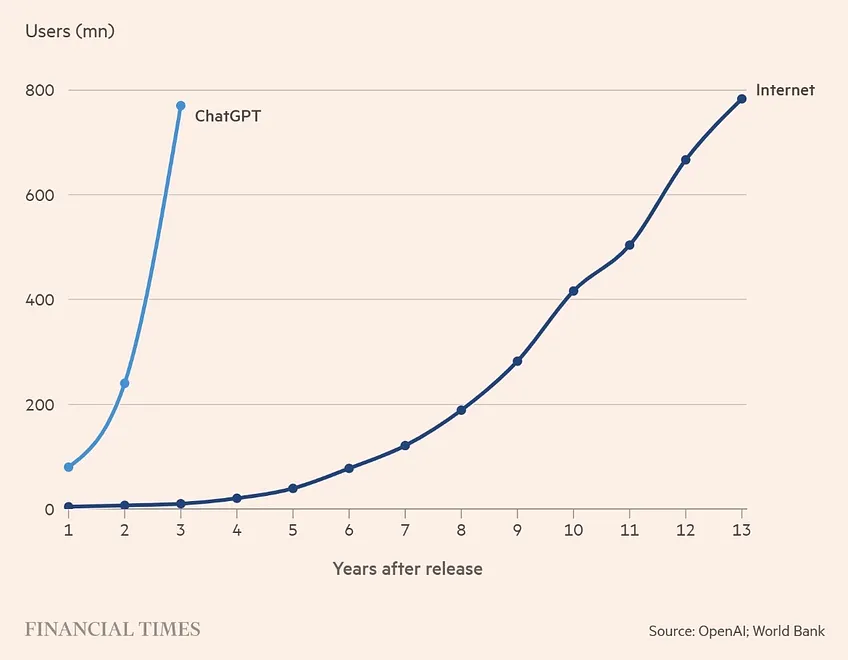
A study from the Federal Reserve Bank of St. Louis found that 39% of Americans between the ages of 18 and 64 had used generative AI within roughly two years of its mass-market introduction.
At the comparable point, internet adoption was around 20%. The internet took approximately five years to reach the level AI reached us in less than two.
Until now, nothing in our lifetimes had spread as quickly as the internet. Based on the adoption data cited above, AI is moving nearly twice as fast.
AI adoption against internet adoption
Many investors will look at that curve and conclude that it’s time to dump a load of cash into AI stocks.
But that’s where the trouble begins, because recognizing an inevitable technology is not the same thing as understanding who will make money from it.
Betting on the inevitable
AI technology (in many different forms) will touch practically every company in America. But it will not reward all of them equally.
Enormous sums, trillions of dollars, are already pouring into semiconductors and the power-hungry data centers required to run the models.
Some businesses will turn that colossal buildout into decades of cash flow and investment returns for shareholders.
A great many more will discover that spending money on an indispensable technology does not make the spender indispensable.
The Great AI Divide will not be between people who believe in AI and people who do not. It will be between those who own the scarce, profitable parts of this new economy and those whose livelihoods are being repriced by it.
That’s why I recorded this sit-down with Luke Lango, one of the best technology investors I know. Luke recommended AMD in 2015, and he has spent years studying how these technological shifts create, and destroy, fortunes.
In our critical broadcast, Luke and I explain where we believe the durable economics of AI will appear and why several of today’s most popular stocks may disappoint their investors.
We also reveal the name and ticker of a little-known spin-off from a century-old American business that we believe could become crucial to the data-center buildout.
Watch my critical broadcast in full today.
Good investing,
Porter Stansberry
The claims above are the advertiser’s own.
THIS IS AN ADVERTISEMENT
One Last Sip
The rate holds through April 30, so none of this has to be settled this morning. That is unusual, and worth using.
What is on offer is narrow and plain. A government promise to pay a set amount above inflation, with no way to lose the principal.
For an account that already owns the stock market, the appeal was never the headline number. It is the part that does not change when the next six months do.

Keep Reading