☕ DrinkCoffeeAndProfit
Smart money moves before breakfast
Inspiration Quote for the Day
“Inflation is when you pay fifteen dollars for the ten-dollar haircut you used to get for five dollars when you had hair.”
Sam Ewing
The Morning Ritual
Twenty-Two Days Left to Lock a 4.26% Inflation Bond. Most Savers Never Look.
If you keep a savings account, you have probably watched the rate on it drift around all year. Up a little. Down a little. There is a quieter account the Treasury runs that most people forget exists. It ties your interest to inflation, and its current rate expires in 22 days.
Here is what caught my eye. The Series I savings bond pays `4.26%` on anything bought through October 31. On November 1 the rate resets. And there is a small calendar quirk that rewards whoever buys late in the month, not early.
An inflation bond is a bet that the dollar keeps losing ground. Our partner below argues that slide has already begun.
· · · Partner Message · · ·
The downward slide has begun.
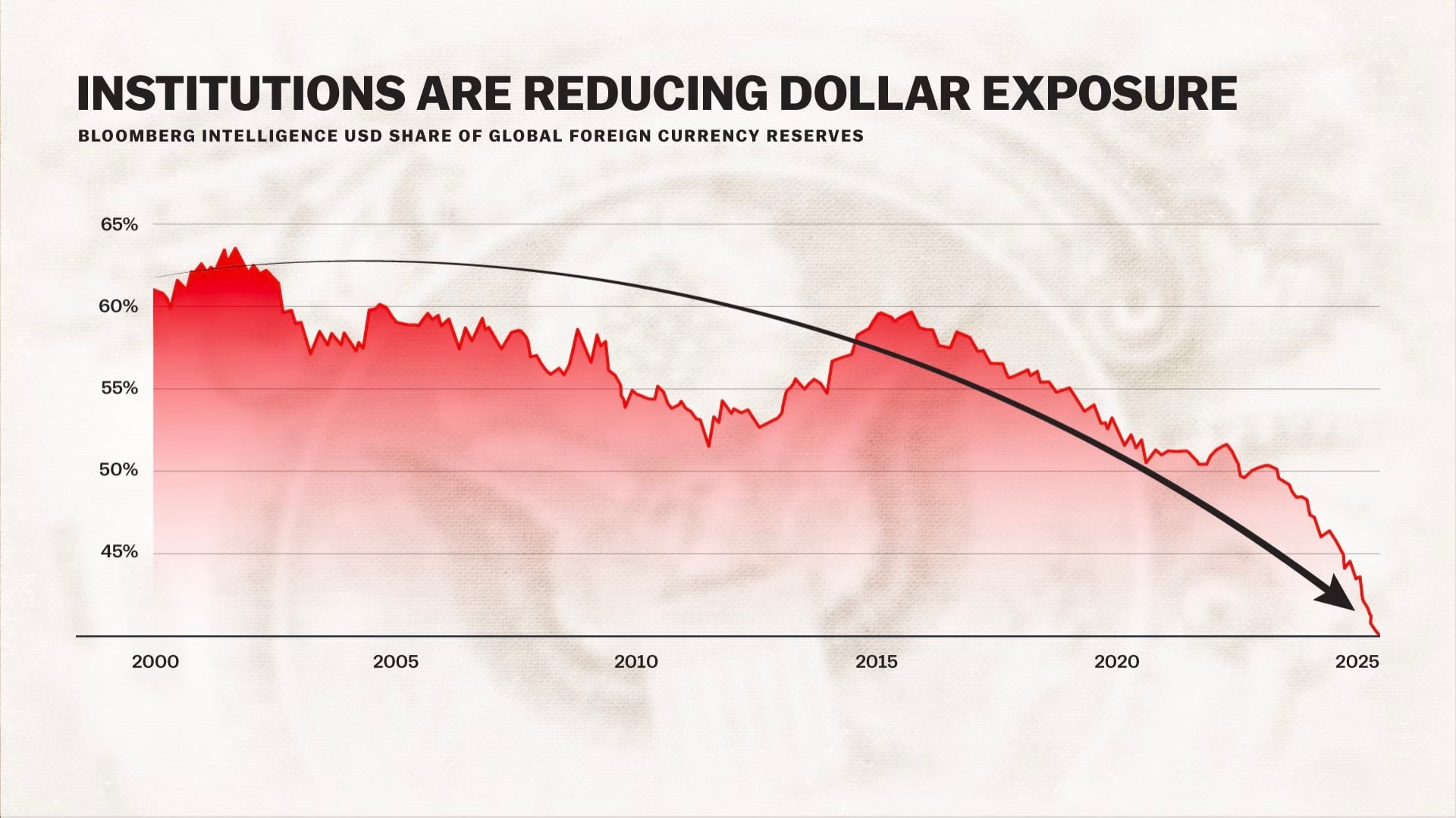
According to new research from Bloomberg, the U.S. dollar’s share of global reserves has just fallen to the lowest level this century.
Institutions are reducing dollar exposure
While everyone is distracted by hyped-up IPOs and the AI bubble, the world is walking away from the dollar, the foundation on which all of our lives are built is crumbling.
And I believe the consequences for the country, and your financial security, are extremely serious.
President Trump knows it. That’s why he has taken emergency action by signing executive order 14241 to initiate the first full reset of the American dollar in half a century.
That means every dollar you have saved and invested… every good, every service, every asset… all of it could be about to be repriced against a new monetary anchor.
It’s not gold, or crypto, but something far more unexpected. An asset so fiercely contested and so critical that Vladimir Putin once claimed whoever controls it “will become the leader of the world”
Nobody can tell you exactly how this reset will play out.
But I do know that the last time America changed its money like this, half a century ago, it split the country in two. Between the folks who understood what was happening and responded accordingly, and those who got brutally left behind.
That line is being drawn again. And what you do with your money in the months ahead could decide which side you end up on.
I’d like to show you which investments could thrive, and which could be the most dangerous, inside Trump’s new monetary order.
The full story is here.
Good investing,
Porter Stansberry
This is an advertisement.
In One Sip
► Series I savings bonds bought through October 31 earn `4.26%` for their first six months. Source: TreasuryDirect.
► It combines a `0.90%` fixed part that lasts `30` years with an inflation part that resets every six months. Source: TreasuryDirect.
► The new rate arrives November 1. At the same fixed rate, one tracker estimates it lands near `3.80%`. Source: Finbarrow, an estimate.
► You can buy up to `$10,000` per person each year online, starting at `$25`. The interest is free of state income tax. Source: TreasuryDirect.
► The buried part: an I bond earns interest from the first day of the month you buy it. Buy on October 30 and you are credited for all of October.
Why It Matters for Your Money
Say you put `$10,000` into an I bond on October 30 instead of October 1.
For those 29 days, your cash keeps earning in a savings account. At about `4%`, that is roughly `$32`.
The bond still credits the whole month of October, about `$35` at `4.26%`. Your money earns twice for the same month, worth +`$32`.
Over the first six months, the bond pays about `$213` on that `$10,000`. If November’s rate lands near `3.80%`, a November buyer would earn closer to `$190`.
Small numbers, yes. But this one costs you nothing except the date you click.
Sound familiar? The same rule works every month. Late in the month is always the better day to buy.
Your statement shows how many dollars you have. Our partner below asks the harder question: what will those dollars buy?
· · · Partner Message · · ·
Your retirement doesn’t need a market crash to get gutted.
Inflation can do it quietly.
You open your statement. $300,000. $500,000. $1 million. Everything looks fine.
But what if those dollars buy less every year?
Food costs more. Healthcare costs more. Insurance costs more. Utilities cost more.
Meanwhile, the money you spent decades saving has to stretch further and further.
That’s how inflation can destroy purchasing power without taking a single dollar from your account.
We’ve created a free guide revealing 3 steps you can consider taking as inflation continues squeezing the value of your money.
Because your retirement statement only tells you how many dollars you have.
It doesn’t tell you what those dollars will actually buy.
Get Your Free Guide Now
See what inflation could be doing to your retirement savings.
This is an advertisement.
The Wealth Angle
Here is where it gets interesting. An I bond is not the highest yield on the board right now. The `10`-year Treasury pays near `5.3%`, and that beats `4.26%` today.
Each one behaves differently if prices jump. A Treasury pays the same fixed rate no matter what inflation does. An I bond resets every six months with it.
Think about that for a second. One is a bet that inflation stays tame. The other is insurance in case it does not.
There are strings. You must hold an I bond at least `12` months. Cash it before five years and you give up the last three months of interest.
I like I bonds as the inflation slice of a savings plan, not the whole plan. With prices still rising near `3.4%` a year, a small slice of insurance is cheap.
☕ Key Insight:
I bonds bought through October 31 earn `4.26%` to start, with a `0.90%` fixed rate for life. Buy late in the month and October’s interest is still yours.
Coffee Break Move
Before your second cup, decide whether you want a slice of inflation insurance this year.
If you have savings to spare: open a TreasuryDirect account this week. Verification can take a few days. Then buy in the last days of October to catch the full month.
If money is tight: the minimum is `$25`. Even a small bond teaches you how the account works before you need it.
The current rate ends October 31. The calendar trick works any month after that, so it is worth remembering either way.

Keep Reading