|
☕ DrinkCoffeeAndProfit
Smart money moves before breakfast
|
· · · Partner Message · · ·

|
Reg A+ · Nasdaq $RYSS reserved
|
Investor briefing · M&A in smart home
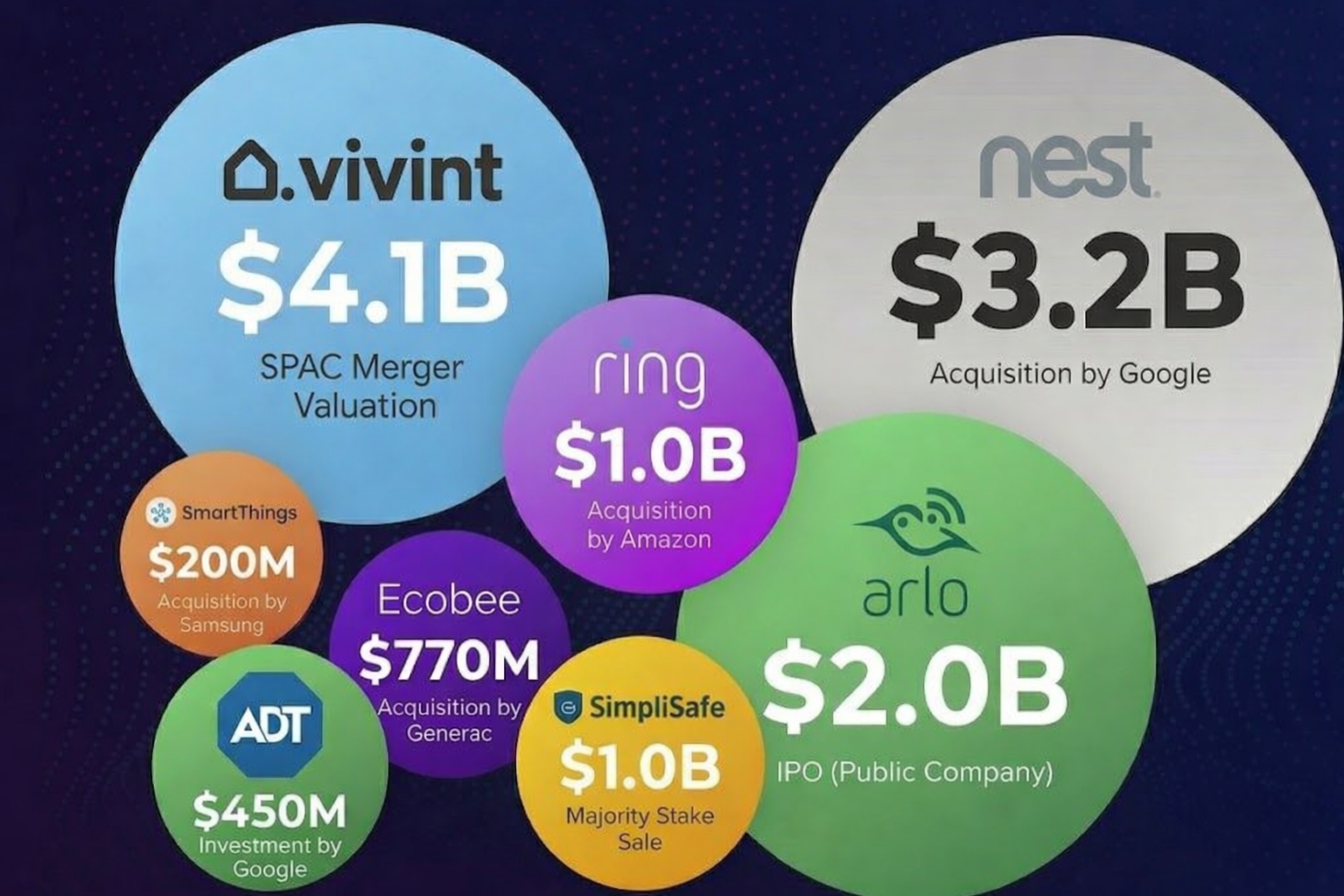
Vivint $4.1B. Nest $3.2B. Arlo $2.0B. Ring $1.2B. RYSE owns the last untouched category. Pre-IPO at $2.50/share, recently up from $2.45.
Smart home exits, by deal value
| Company |
Event |
Value |
| Vivint |
SPAC merger |
$4.1B |
| Nest |
Acquired by Google |
$3.2B |
| Arlo |
IPO valuation |
$2.0B |
| Ring |
Acquired by Amazon |
$1.2B |
| SimpliSafe |
Majority sale |
$1.0B |
Each of these started in one overlooked category. Each ended with a billion-plus exit. The largest manual category left in the home is window coverings. RYSE leads it.
Patented retrofit robots install in minutes on existing shades, blinds, and curtains. Real distribution: 100+ Best Buy locations, plus Amazon, Home Depot, and Lowe’s. Real revenue: $15M+ lifetime, 80,000+ devices in homes. Real moat: 10 granted patents and an Amazon court ruling that blocks copycats.
RYSE is pre-IPO with reserved Nasdaq ticker $RYSS. The Reg A+ round is open at $2.50 per share, recently up from $2.45.
|
$15M+
Revenue
|
80K+
Devices sold
|
100+
Best Buy stores
|
10
Patents granted
|
Current pre-IPO share price
|
$2.50 / share
|
Next increase ahead
|
~$1,002 minimum · IRA eligible · No lock-up · Bonus shares available
Bonus shares program
| $2,500 |
+10% bonus shares |
| $10,000 |
+20% · effective $2.08/share |
| $100,000 |
+40% · effective $1.79/share |
| $250,000 |
+50% · effective $1.67/share |
Important disclosures. This is a paid advertisement for RYSE Inc. made pursuant to a Regulation A+ offering and involves risk, including the possible loss of principal. The valuation is set by the Company; there is currently no public market for the Company’s Common Stock. Nasdaq ticker “$RYSS” has been reserved by RYSE; any potential listing is subject to future regulatory approval and market conditions. Comparisons to Vivint, Nest, Arlo, Ring, and SimpliSafe are illustrative of historical smart home category exits and do not imply similar outcomes for RYSE investors. SEC qualification does not constitute SEC approval of the merits.
RYSE Inc., 96 Spadina Avenue, Suite 500, Toronto, ON M5V 2J6, Canada
|
Inspiration Quote for the Day
“If you don’t find a way to make money while you sleep, you will work until you die.”
— Warren Buffett
|
|
The Morning Ritual
My Uncle Never Made More Than `$68,000`. He Retired Worth Half a Million.
|
My uncle drove the same Ford Ranger for `14` years. Worked at a water treatment plant in southern Ohio. Never cracked `$68,000` in a single year. The truck had rust on both fenders and a tailgate that only closed if you slammed it twice.
He died three years ago. His estate cleared `$540,000`. His neighbors could not believe it. I could not either, until I looked at the numbers. Then it was the only figure that made sense.
|
In One Sip
► The Federal Reserve’s latest Survey of Consumer Finances puts the median American net worth at `$192,700`. The average is `$1.06` million. That gap tells you how concentrated ownership really is.
► Homeowners carry a median net worth of roughly `$400,000`. Renters: `$10,400`. A `40`-to-`1` difference.
► `58%` of Americans own stock in some form, according to Gallup. Only `21%` own shares directly through a brokerage account.
► The wealthiest `1%` of Americans hold `50%` of all U.S. equities. That is roughly `$27.6` trillion.
► The bottom `50%` of households hold just `1%` of all stocks. About `$590` billion, split across `65` million families. That is the number nobody wants to say out loud.
|
Why It Matters for Your Money
Your paycheck keeps the lights on. Ownership is what builds wealth.
That `40`-to-`1` gap between homeowners and renters does not come from salary differences alone. It comes from the fact that every mortgage payment goes somewhere. It builds equity. Rent disappears the moment it leaves your account.
Here is the dollar math. A family that bought a house for `$280,000` in 2020 is sitting on roughly `$420,000` in home value today. That is `$140,000` in wealth created by owning a piece of something. Not by working extra shifts. Meanwhile, a renter paying `$2,000` a month spent `$144,000` over those same six years and built zero equity. Same neighborhood. Same household income. One family owns the roof. The other one rents it.
Now add investing. `$200` a month into a basic S&P index fund over `20` years, at a historical average of `8%`, grows to roughly `$118,000`. Your actual contributions: `$48,000`. Compound growth did the rest while you slept.
That was my uncle’s entire playbook.
|
The Wealth Angle
Now here is the part most people miss. Ownership is not just houses and retirement accounts. It is a daily habit. My uncle bought `12` shares of his local utility company in `1998`. He never made a big bet. He added tiny positions when he could. He never sold when the market dropped.
I think most people misunderstand how wealth actually works. They assume it takes a big salary. The Fed data says otherwise. The difference between the `50th` and `75th` percentile of net worth at age `45` is roughly `$350,000`. Researchers consistently find the gap comes from savings rate, not income. The person earning `$75,000` who owns things quietly beats the person earning `$120,000` who only spends.
The wealthiest people I know do not have better instincts. They have better ownership habits. They let small positions compound. They treat a brokerage account like a savings account that actually grows.
|
☕ Key Insight:
Your paycheck keeps you alive. What you own is what makes you wealthy. The top `1%` hold `50%` of all equities. The bottom `50%` hold `1%`. You do not close that gap by earning harder. You close it by owning earlier.
|
Coffee Break Move
This weekend, do one thing. Pull up your brokerage account. If you do not have one, open one. Most take ten minutes and a photo of your driver’s license.
If you are already investing, check one number: are you maxing your employer’s 401(k) match? That match is the closest thing to guaranteed wealth your job will ever hand you. If you are leaving it on the table, fix it Monday morning.
If you are not ready for stocks yet, check your home equity. Log in to your lender’s portal or call them. That number probably matters more than your salary did last year.
My uncle never read a single finance newsletter. He just owned things, held them, and let time do the math. By the time the rest of us figured it out, he had already won. His rusty Ranger was parked out front the whole time.
|
|