|
☕ DrinkCoffeeAndProfit
Smart money moves before breakfast
|
|
Inspiration Quote for the Day
“Never spend your money before you have it.”
Thomas Jefferson
|
|
|
The Morning Ritual
Extra Mortgage Payments Just Lost Their Edge for Half of Homeowners
|
If you have a mortgage, there is a good chance you have made an extra principal payment at some point. Maybe a tax refund. Maybe a bonus. It feels like the safest money move there is. You can watch the balance shrink on the next statement.
Here is what caught my eye this week. The government now pays close to `5.3%` to borrow for ten years. Roughly half of homeowners with a mortgage pay less than `4%` on their mortgage. When those two numbers cross, the extra payment stops being the obvious choice.
|
|
A Treasury yield is a promise paid in dollars. Our partner below argues the dollar itself is about to change.
|
|
· · · Partner Message · · ·
We believe Executive Order 14241 has unleashed a potentially huge change to America’s money.
Republican or Democrat, whether you support or oppose Trump’s New Dollar, you could soon be using it. If you have savings in the bank or a stock portfolio, we believe you need to understand what’s unfolding, and take specific action to prepare.
In Porter Stansberry’s new documentary, you’ll discover:
• How the last time America reset its money, it minted 1,300 new millionaires a day, and why we believe what’s coming could be bigger still.
• The 5 assets to own before America’s new money rolls out, including the one Porter would buy today for immediate exposure.
• The critical resources Trump is moving heaven and earth to control, because America’s new money depends on it.
• Why the U.S. government is suddenly buying ownership stakes in tiny American mining companies, a move not seen since the depths of World War II.
• Why a single gathering of world leaders this December, at Trump’s own Miami resort, could be the moment America’s new dollar is revealed to the world as a done deal.
Many thanks,
Jared Kelly
CEO, Porter & Co.
This is an advertisement.
|
|
|
In One Sip
► The `10`-year Treasury yield is near `5.3%`, its highest level since `2002`. Source: Trading Economics, October 6.
► The average new `30`-year mortgage rate hit `7.28%` last week. Source: Freddie Mac, October 1.
► About `49%` of outstanding mortgages carry a rate below `4%`, and `19.2%` sit below `3%`. Source: FHFA data via Wolf Street.
► Interest on Treasury bonds is taxed federally but is exempt from state and local income tax. Source: TreasuryDirect.
► The buried part: most homeowners take the standard deduction now. So their mortgage interest saves them no tax at all, and every dollar of it is a true cost.
|
|
|
Why It Matters for Your Money
Say you have `$10,000` you were going to send to a `3%` mortgage.
Prepay it, and you save about `$300` a year in interest. Guaranteed, and no tax on the savings.
Put the same `$10,000` in a `10`-year Treasury at `5.3%`. That pays about `$530` a year.
After federal tax in the `22%` bracket, you keep about `$413`. That is roughly +`$113` a year more than the prepayment, every year for ten years.
Now flip it. If your mortgage rate is `7.28%`, like a new loan today, prepaying saves `$728` a year. The Treasury cannot touch that.
Sound familiar? The rule is simple. Compare your mortgage rate to the Treasury yield after tax. In the `22%` bracket, the line sits near `4.1%`.
|
|
|
Treasuries, mortgages and savings accounts all share one thing: they are measured in dollars. Our partner below asks what else should sit in a retirement account.
|
|
· · · Partner Message · · ·
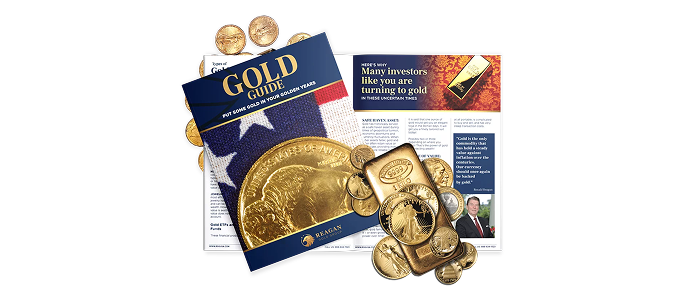
You cannot opt out of monetary policy. Nobody in America can. What you really can decide is how much of your retirement savings stays denominated in a unit that somebody else’s policy controls. That is a choice most Americans have never consciously made, largely because nobody has ever presented it to them as one. The free Reagan Gold Group guide presents it clearly and shows exactly how all of the mechanics work. P.S. Moving a portion of an IRA into physical metal is allowed under existing IRS provisions, without taxes or penalties when handled correctly. The free Reagan Gold Group guide walks you through the whole process.
Reagan Gold Group does not provide financial, legal, or tax advice. This information is for educational purposes only and should not be considered investment advice. All investments carry risk, including loss of principal. Past performance is not indicative of future results. Consult your licensed financial advisor before making investment decisions.
This is an advertisement.
|
|
|
The Wealth Angle
Here is where it gets interesting. The math is only half the decision. The other half is where the money can go once it is spent.
|
|
|
· · · Partner Message · · ·
This is an advertisement.
|
|
An extra mortgage payment is easy to make and hard to undo. To get it back, you would need a home equity line, and the average HELOC rate is about `8%` right now. Source: Money.com.
A Treasury can be sold any business day. Hold it to maturity and you get every dollar back. Sell early, and the price can be lower if rates keep climbing.
Think about that for a second. One choice is locked inside the house. The other stays liquid but can wobble.
I think most homeowners with a sub-`4%` loan should stop rushing to prepay it. That rate is the cheapest money they will see for years. I would keep the extra cash working, and liquid.
|
|
|
☕ Key Insight:
A sub-`4%` mortgage is cheaper than a `5.3%` Treasury after tax. Before sending extra principal, compare the two numbers. The bigger one gets the dollar.
|
|
|
Coffee Break Move
Before your second cup, pull up your mortgage statement and find the interest rate, not just the payment.
If your rate is under about `4%`: pause the extra principal payments for now. Park new savings somewhere that pays more and stays reachable, whether a Treasury or a high-yield account.
If your rate is above about `5%`: extra payments still make sense, especially if you carry no other high-rate debt. Keep three to six months of bills in cash first.
Either way, write the two numbers side by side. Your rate, and today’s `5.3%`. The bigger one gets the extra dollar.
|
|